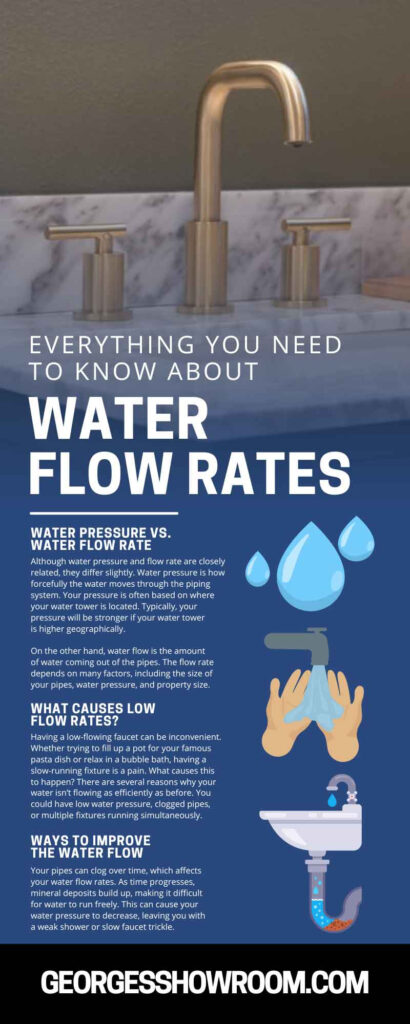
There’s nothing worse than your water pressure dropping mid-shower. If you’ve ever wondered why this happens, here’s everything you need to know.
We know nothing is meant to last forever, but when your showerhead stops working at its full potential, you can’t help but get annoyed. What was once a full stream of water is now a trickle, leaving you cold and confused. Whether you live with a family of four or alone in a studio apartment, you should have a steady flow of water using any fixture in the house-kitchen sink, shower, or dishwasher.
Typically, the flow rate can fluctuate due to toilets flushing or another shower running. These two actions happening simultaneously can affect the water flow and pressure. However, if you experience a change in water flow often, you could use assistance from a professional plumber.
Here’s everything you need to know about water flow rates to help you troubleshoot your issues.
Why Does the Water’s Flow Rate Matter?
OK, what is a water’s flow rate, and why does it matter? Your water’s flow rate is the amount of water used within a certain period. This is calculated in gallons per minute (GPM) and can help tell you if there’s an issue beneath the surface.
Your home’s flow rate depends on numerous factors, including household size. A standard-sized home (two to four people) will have a different average GPM than a larger home (four or more people). Your home’s square footage also plays a major role in your home’s flow rate. This is because moving the water to its destination may take longer or require more pressure.
Water Pressure vs. Water Flow Rate
Although water pressure and flow rate are closely related, they differ slightly. Water pressure is how forcefully the water moves through the piping system. Your pressure is often based on where your water tower is located. Typically, your pressure will be stronger if your water tower is higher geographically.
On the other hand, water flow is the amount of water coming out of the pipes. The flow rate depends on many factors, including the size of your pipes, water pressure, and property size.
What Causes Low Flow Rates?
Having a low-flowing faucet can be inconvenient. Whether trying to fill up a pot for your famous pasta dish or relax in a bubble bath, having a slow-running fixture is a pain. What causes this to happen? There are several reasons why your water isn’t flowing as efficiently as before. You could have low water pressure, clogged pipes, or multiple fixtures running simultaneously.
Signs It’s Time To Check the Water Flow
Water is one of the most important elements in our homes—in our lives. We use it for everything, from cooking to cleaning to drinking. As a homeowner, you know how your water typically flows. If you notice a persistent change in your water flow and pressure, don’t ignore it. If so, you could face an expensive repair and a disruption in your daily routine.
Fluctuating Water Pressure
As stated before, things change, break, and lose efficiency – that’s normal. However, your water pressure and flow should be consistent. You should contact a professional if your water doesn’t flow as efficiently as before. It could be a blockage, corroding pipes, or an issue with incoming water flow.
Slow Water Flow
The water pressure and flow should be consistent whether you’re in the bathroom, laundry room, or kitchen. If you notice that your water is reduced to a trickle or running slowly, you should contact your local plumber. Turning on your faucet and getting a few dribbles could indicate clogged pipes or low pressure.
Toilet Running
Your toilet will let you know if there’s a pressure and flow issue. The first indicator of a piping issue is how long the toilet takes to refill. After you flush, see how long your toilet runs. The bowl should take less than 160 seconds to refill. However, you may have an issue if it takes longer than that or continuously runs.
Banging Noises in the Pipes
Water flowing is the only noise you should hear when using your water fixture. Banging noises in the pipes could signal a major issue. Hearing unusual noises from your piping isn’t something to overlook. Ignoring these sounds could lead to leaks, breakage, and damage to your fixtures.
Ways To Improve the Water Flow
Low water flow and pressure can be annoying. Don’t start or end your day frustrated because of dribbling water. If you’re experiencing low water flow and pressure throughout your home, contact a professional to help troubleshoot the issue. Here are a few ways to improve your water flow.
Clear Clogged Pipes
Your pipes can clog over time, which affects your water flow rates. As time progresses, mineral deposits build up, making it difficult for water to run freely. This can cause your water pressure to decrease, leaving you with a weak shower or slow faucet trickle.
If you suspect that your pipes are clogged, it’s always best to troubleshoot this issue early. Some pipes can get severely clogged and require a section of the system to be replaced.
Talk to Your Neighbors
Your neighbors could also be experiencing the same thing as you! Communicate with them to see if they’re experiencing low water flow rates and pressure. If so, this could be a problem with the city’s water system. However, if your neighbor isn’t experiencing the same issues, you should contact a plumber to find the source of the problem.
Install New Fixtures and Pressure Booster
The piping, fixtures, and water pressure can sometimes affect your flow rate. Leaks, damage, corrosion, and numerous other factors can cause trickling water. Installing a new fixture and water pressure booster can help create a consistent water flow. With a new booster pump and fixture, you’re guaranteed a better experience in your home.
We hope our quick guide taught you everything you need about water flow rates. At George’s Showroom, we offer luxurious fixtures to help accommodate your space. For a smoother water flow, we provide Dornbracht bathroom faucets and other fixtures to boost functionality and aesthetics. Check out our large selection of kitchen and bathroom fixtures for you!