

When designing your kitchen remodel or new construction, making decisions with accessibility in mind can be beneficial for the long-term function and value of your house. Whether simply updating you or a loved one’s space or planning your forever home, consider implementing these senior-friendly features to help you in maintaining independence and aging-in-place gracefully.
Floorplan and Layout
For your senior-friendly kitchen, it is important to include accessible, wide pathways (at minimum 36 inches) to ensure ample space for walking and mobility aids. Consider the distance between appliances and the practicality of your workspace. Including seating at a built-in bar or island can offer a handy resting place between periods of standing or walking.
Cabinetry
Accessible Storage
When it comes to kitchen cabinets, we have all come across the awkward corner or “just out of reach” shelves where holiday platters and small appliances go to never be seen again. Innovative pull-outs, drawers, and pull-down shelves are a clever solution to maximize your kitchen’s storage potential while prioritizing accessibility. Consider implementing deep, pull-out drawers as opposed to upper cabinet shelves for storing dishes and cookware.

Soft Close Doors
Protect fingers and minimize unwanted noise with soft close cabinet door hinges. These hinges are crafted to ensure that your cabinet doors close slowly and safely, preventing injury and damage to your cabinetry or personal belongings.
Knobs or Pulls
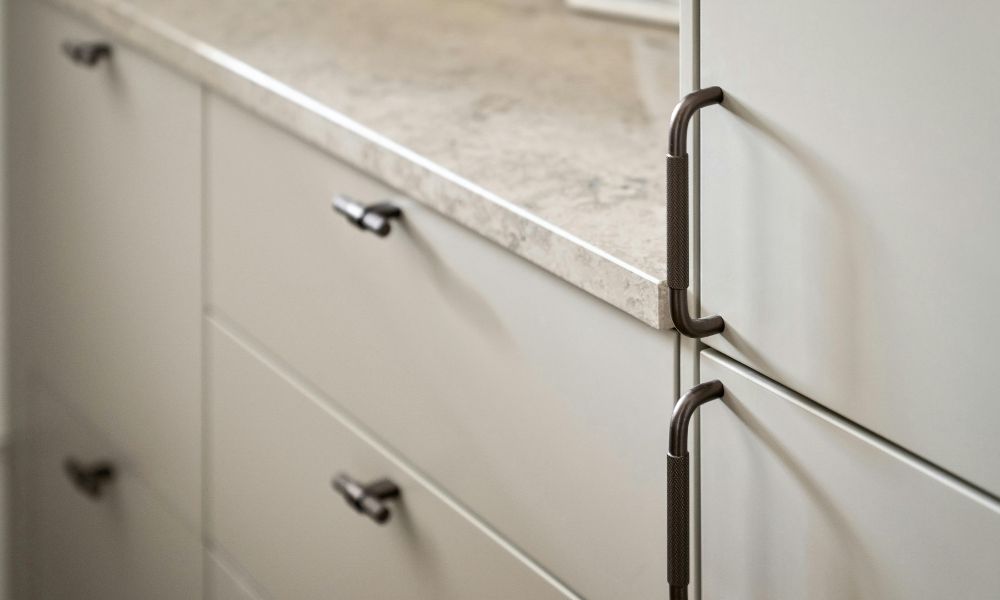
In a contest of accessibility, cabinet pulls are generally considered more accessible than knobs. Their design allows for a more secure grip for those with limited strength and mobility, including arthritis. Cabinet pulls come in a variety of styles, shapes, and sizes, making them a better fit for a variety of hand and door sizes. Pulls with smooth, rounded edges and no protruding design features to snag cuffs, pockets, or belt loops are ideal.
Appliances
Appliance Placement
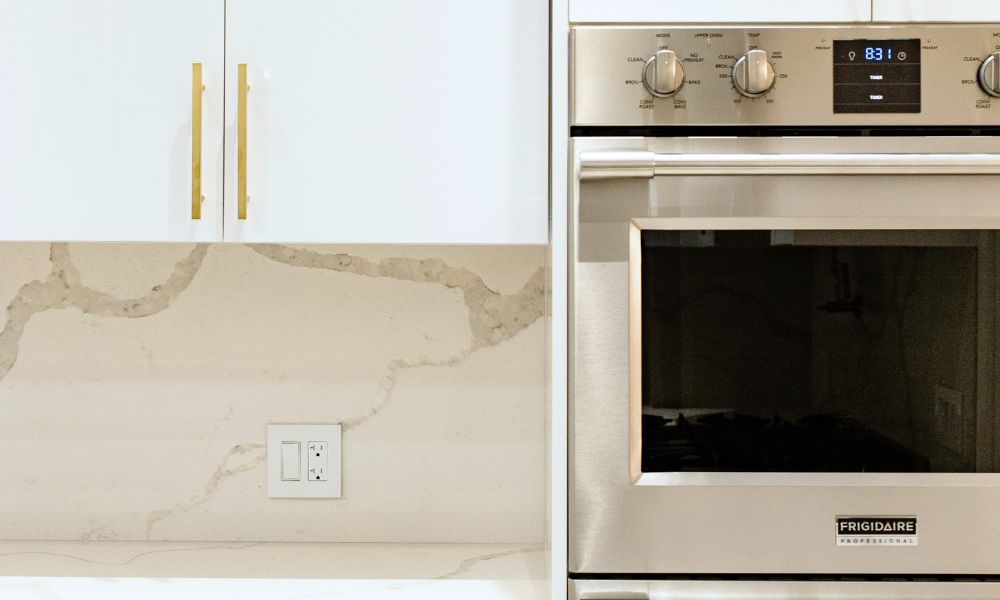
Consider placing ovens, microwaves, dishwashers, and other appliances at counter or chest height to prevent stooping and squatting that may result in strain or injury. Wall ovens are a great solution to optimize your kitchen’s accessibility. Ensure that you have ample counterspace nearby for hot dishes to be quickly and safely set down on. Over-the-range microwaves can prove challenging for those with mobility issues. Place your microwave closer to counter-height for optimal accessibility.
Countertops
Countertop Height
ADA compliant kitchen countertops cannot exceed 34 inches in height, making them on average 2 inches shorter than standard kitchen counters. Depending on your height, the national average of 36 inches may work fine for you. If you are shorter in stature or struggle with mobility issues, you may find that 34 inches may be a more comfortable fit for you and your home.
Rounded Edges
Rounded, bullnose, or waterfall-edge countertops are a subtle safety feature that can prevent injury in the event of bump, scrape, or fall. Rounded-edge countertops feature few to no hard edges that can prove a safety hazard when working in and around a kitchen.
Slip Resistance
In addition to rounded edges, choosing a countertop with a slip-resistant finish can be an injury-preventing safety feature. Leathered granite, honed quartz, textured laminate, and matte solid surface countertops offer a textured surface that can help prevent pots, pans, appliances, and dishes from slipping across and off the counters.

Lighting
Did you know: We require 50% more lighting after the age of 50?
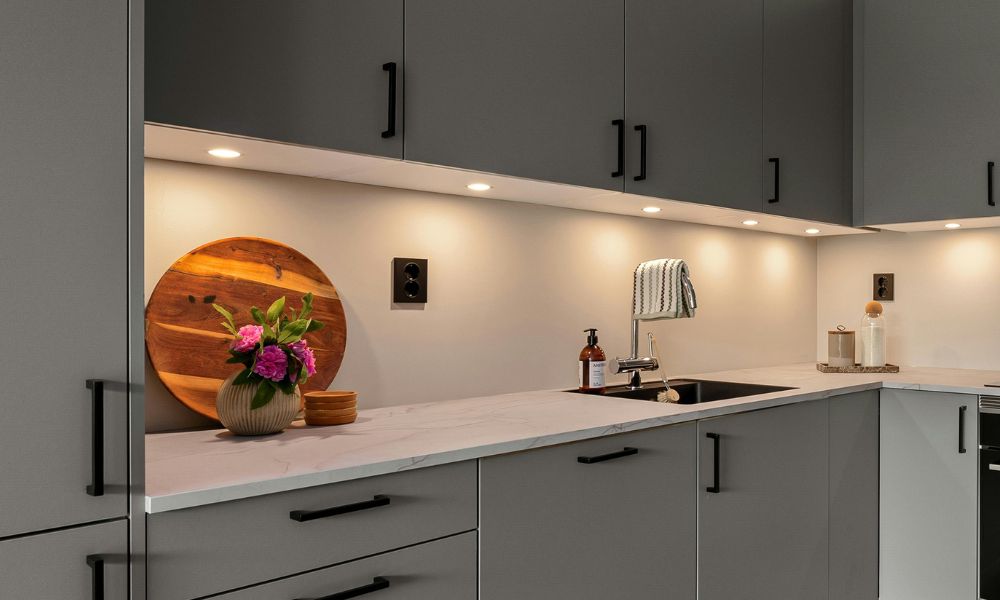
As we age, our eyes begin to weaken, making kitchen tasks like chopping, cutting, cooking, and cleaning more difficult in inadequate lighting. Keep your kitchen safe and easy to navigate by implementing task lighting such as under-the-cabinet and spotlight lighting into your workspace.
Faucets
ADA Compliant Faucets
Selecting an ADA (Americans with Disabilities Act) compliant pull-down or pull-out faucet offers you a wider degree of accessibility and mobility. ADA compliant faucets are required to be operable with one hand if manually operated and must require no more than five pounds of force (lbf) to operate.
Touchless Technology
Touchless technology offers a hands-free experience for those will mobility issues. Easily turn water on and off with the wave of a hand, skipping the push and pull of traditional handles. Some faucets feature additional technology for touchless temperature control, voice activation, and automated filling settings.
Pull-Down or Pull-Out Faucets
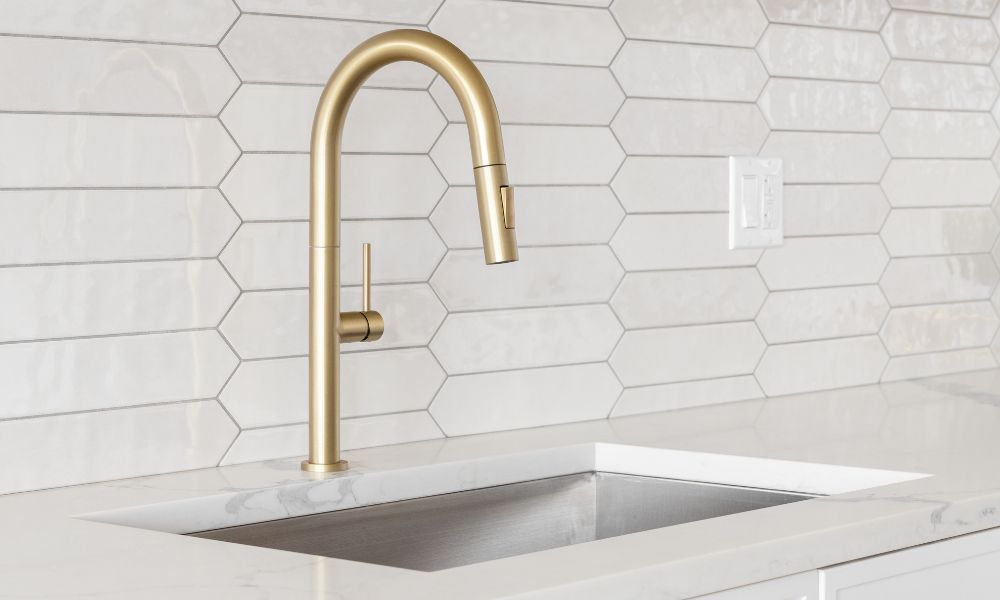
Pull-down or pull-out faucets feature a retractable head and flexible hose that extends your range of motion, making them an excellent choice for those with limited mobility. This extendable hose makes it easier to fill pots without having to lift them in and out of the sink.
Sinks
Though they offer less space than a deep-basin sink, a shallow sink may help you avoid the discomfort of straining to reach the bottom of your sink, particularly if you are on the shorter end of the height spectrum. Shallow sinks take up less space, allowing for additional storage to be utilized beneath them. An ADA compliant sink is no more than 34 inches from the floor.
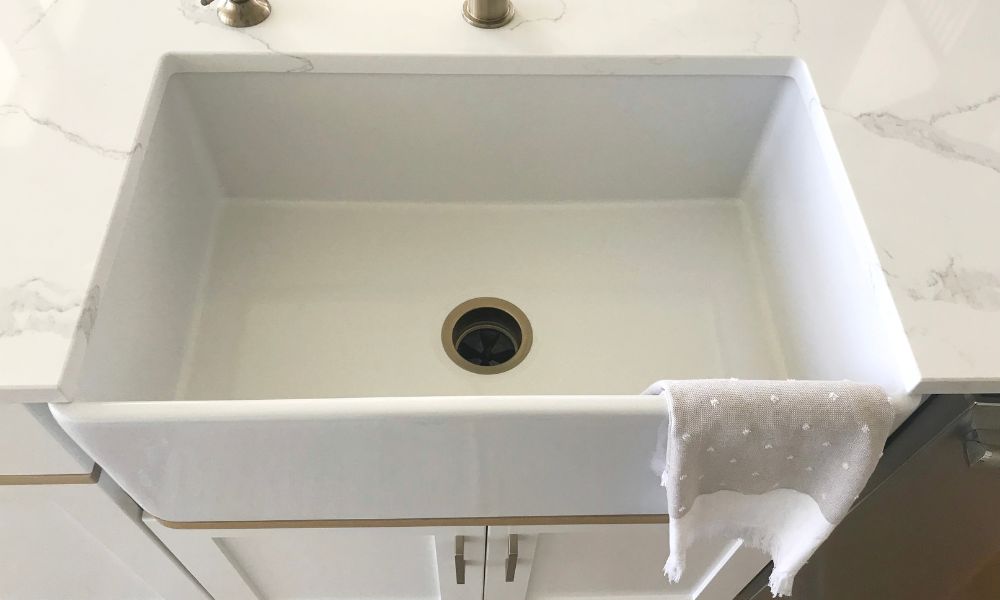
Farmhouse or apron front sinks feature a lower profile, as their exposed front does not require the countertop to run along the outer edge. This small space-saving feature can make a big difference for the accessibility of your sink.
No matter what stage of life you are in, prioritizing the safety and function of your kitchen is an important investment into your future. We hope that, with the help of this list, you have the information you need to make the best decisions for you or your loved one’s home.
Looking to plan your senior-friendly kitchen remodel or new construction? Contact our showroom to get started.