What Is Terrazzo – and How to Rock It
Use this magnificent flecked material to add texture, color and character to kitchens and baths
Terrazzo is a material that feels modern, traditional and endlessly timeless all at once. But what is terrazzo, exactly, and where would you use it? Turns out terrazzo can have a place in any room of the home, creating a luxurious upgrade that lasts and lasts.

What Is Terrazzo?
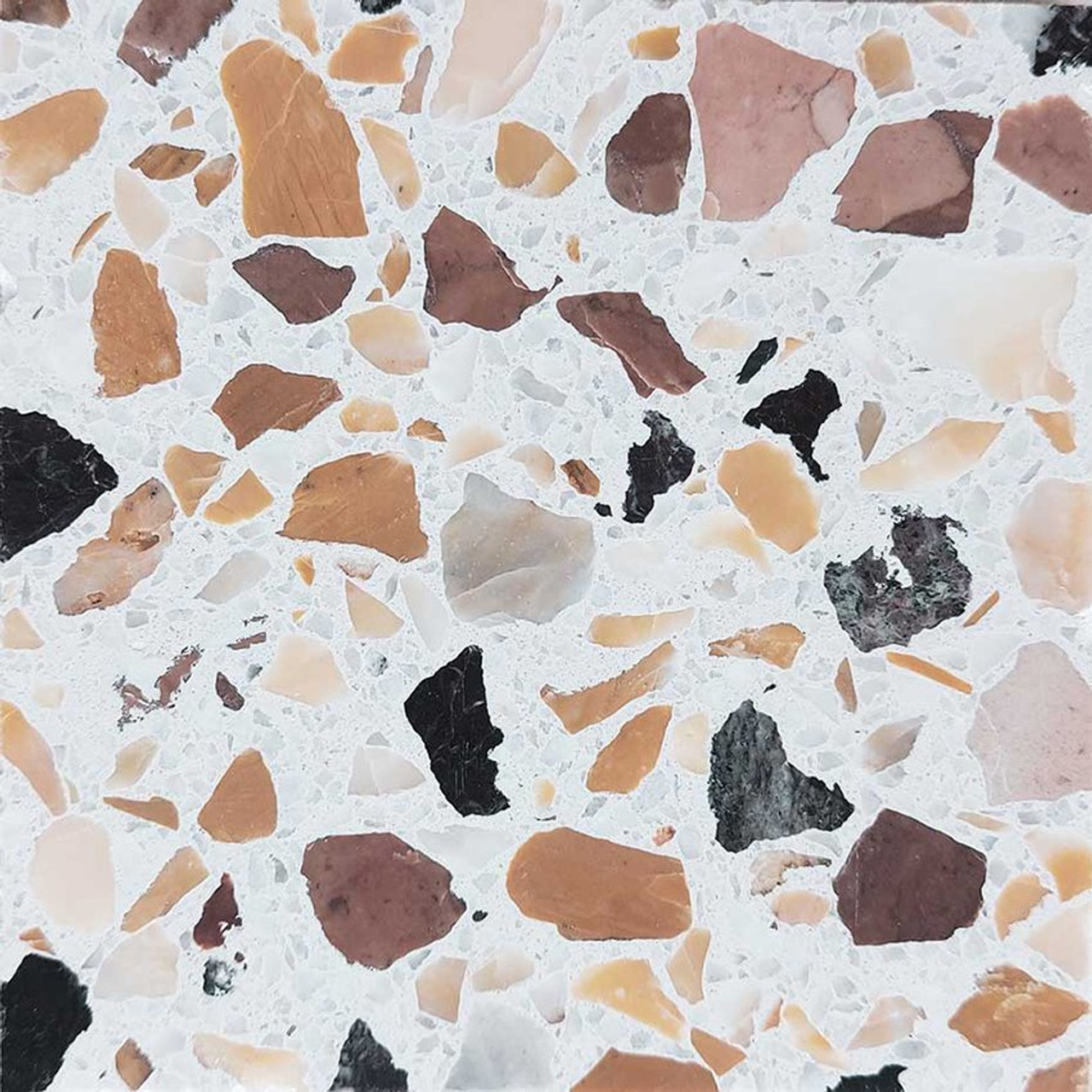
Terrazzo can come in different forms with wildly different looks, depending on the recipe, but essentially it is a concrete base (or sometimes resin) mixed with small chips of another material, such as marble, granite or recycled materials like broken ceramics. This gives terrazzo its signature rich, multitonal appearance.

The material embedded in the base, also known as the aggregate, usually brings the color to the mix, so while terrazzo is often neutral in tone, it can also be very lively, such as in this red-flecked countertop. The visual texture and wide range of possible custom looks are probably why this material has been extra popular lately. It’s a great choice for injecting some character into modern or traditional spaces, it feels a bit trendy but also classic, and it can be very environmentally friendly.
The scale of the size and spacing of the aggregate chips makes a big difference to the look as well. Notice the difference between the look of the terrazzo floor in the first picture and the countertop shown here. The size of the aggregate changes the impact.

How to Use Terrazzo
Texture. While terrazzo can do a great job of supporting other textural elements, it can also be a way to add some visual texture to spaces that don’t otherwise have much, like a modern kitchen with flat-front cabinets and painted walls.
The subtle texture in the floor pictured here is very similar to the first photo, but it becomes much more noticeable when paired with simple white cabinets, bringing out a sense of welcoming personality.

Bathrooms can be a tricky place to add interesting textures. Most if not all of the surfaces in a bathroom should be durable, waterproof and easy to clean. You may not be willing or able to have a brick wall in your bathroom, but adding a terrazzo floor tile will give a similar sense of rugged texture, while standing up to all the moisture.

Here, dark-flecked terrazzo floor tile makes a great textural complement to a simple wall treatment of white ceramic tile with a dark grout, for a look that feels timelessly European and fresh.

Countertops. Looking for a modern countertop material with strength and style? Terrazzo has a similar strength and durability to coveted quartz, but with even greater possibilities for color customization. Plus, depending on the supplier, it can be formed to a requested size or shape, rather than having to be cut from a slab, which can avoid waste while creating a feature, such as the very gently rounded corner shown here.

Here’s another photo from the same kitchen as the previous photo. This really highlights the flecks of white in the black countertop, which give it a more approachable, less gothic look than a pure black counter would. It pairs well with the trendy black sink and black-accented faucet, for a monochromatic color scheme that still has subtle complexity and depth.

A terrazzo vanity like this uses very little material to make a big statement, especially when made from two differing colorways to create a unique contrasting effect. To get an effect like this, choose a white-based terrazzo and a different colorway with a white aggregate so the two tones contrast but also connect. It makes a great backdrop for a white vessel sink, especially finished off with an aged brass faucet.

Slab backsplashes. Slab backsplashes are a big trend right now. The fact that terrazzo can be custom-shaped to fit between your cabinets makes it a smart choice, again avoiding wasteful cutting that can come with having to buy an entire 4-foot-wide slab just to use half.
If you look carefully at this photo, you can see that the same terrazzo used for the backsplash is also applied to the floor, creating strong architectural appeal and a sense of true custom design.
Tabletops. Sure, a white marble tabletop is beautiful, but sometimes you want something a bit more unique to personalize your style. Try a terrazzo tabletop instead, or a fun terrazzo-inspired print, for a lightweight alternative.


How to Complement Terrazzo
Wood. Terrazzo is a manufactured material, but the multitonal appearance helps it look very organic, like a rich stone. This makes it a great companion to warm wood. It can play a supporting role while wood becomes the standout feature.

Stone. Terrazzo also works well with rich, natural stone, especially a stone with a bold grain, like many forms of marble.
When mixing materials with terrazzo, it’s often wise to choose one with a more dramatic appearance to dominate, and a more subtle material to go with it that won’t fight for attention.
In this example the tone-on-tone terrazzo floors support the richly veined countertops, bringing in some of the same hues for a subtle sense of harmony.

Warm colors. One of the downsides of using terrazzo on the floor, compared to softer materials like wood or carpet, is that it can appear “cold” to some people. For this reason, it pairs well with warm, inviting color schemes that use elements of wood, plump loungey upholstery and rich wall colors or treatments.
This modern home (the same as the green kitchen shown earlier) shows how you can use a continuous terrazzo floor in multiple spaces, but then give each area its own personality by adding inviting accents.