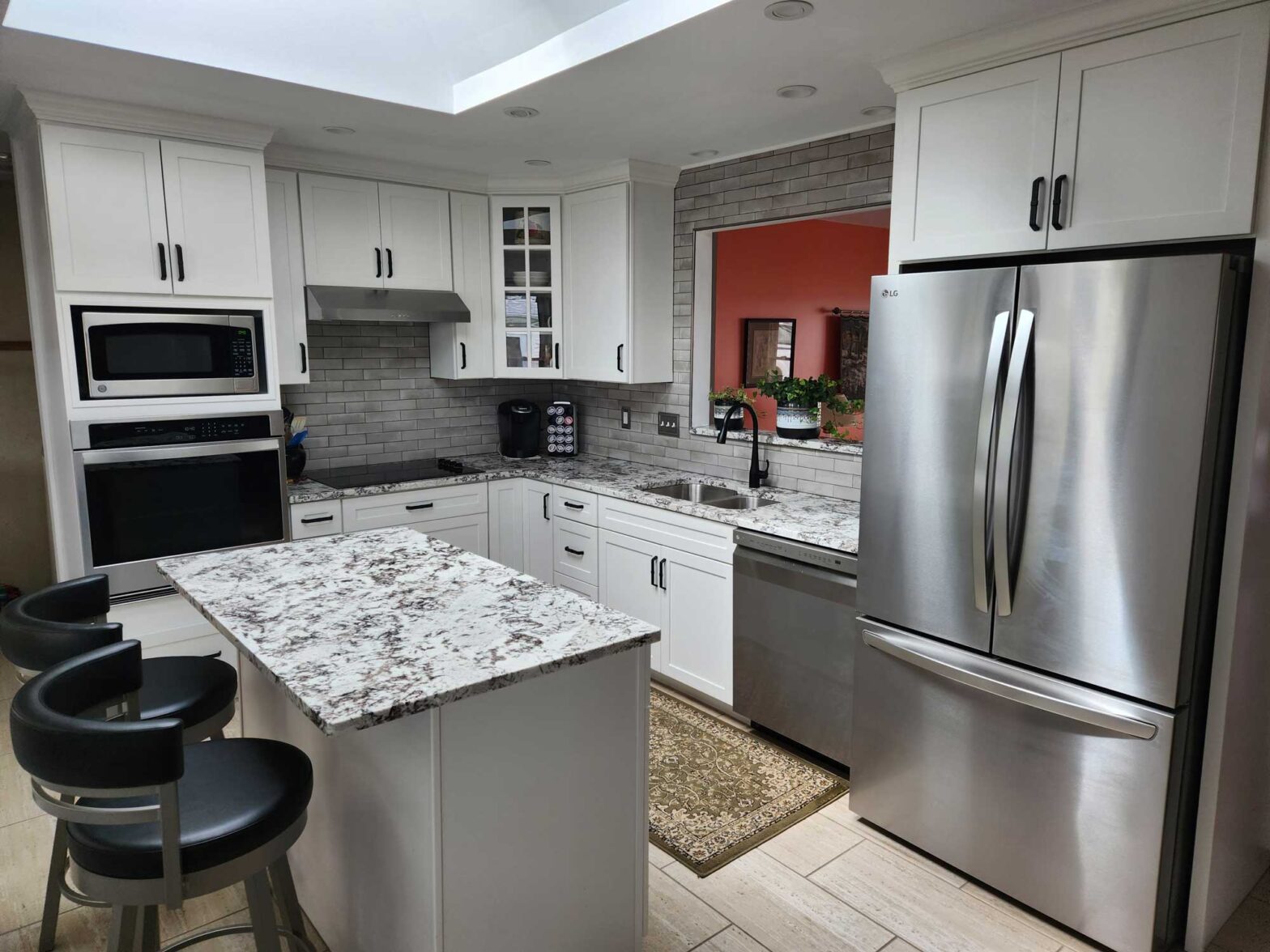

Granite countertops have continued to be popular in home updates due to their durability, aesthetics, and low maintenance. Because of these features, granite countertops have become the standard by which homebuyers judge the appeal of a kitchen or bathroom. However, if you are considering new countertops for your home, you should be aware that, like other countertop materials, there are both pros and cons.
Pros of Granite Countertops
Granite countertops have become popular for several reasons, which include the following:
Durability
Granite is an extremely durable material and can withstand high temperatures, scratches, and stains. It’s one of the hardest materials on earth and can resist chipping and cracking. This makes it an ideal choice for high-traffic areas such as kitchens and bathrooms. The durability of granite countertops is due to their composition. Granite is an igneous rock formed from the slow crystallization of magma deep within the earth’s crust. This process results in a rock that is extremely hard and durable, making it ideal for use as a countertop material. Also, granite’s resistance to heat means that it can withstand high temperatures without being damaged or discolored.
Aesthetics
Granite comes in a wide variety of colors and patterns, ranging from classic whites and grays to bolder shades such as blue, green, and even red. The unique veining and patterns in each slab of granite ensure that no two countertops are exactly alike, giving your home a unique and personalized look.
Resale Value
Granite countertops are considered a premium feature and can add value to a home. In fact, studies have shown that homes with granite countertops can sell for up to 25% more than homes without them. This increase in resale value is due to the perceived luxury and quality of granite countertops.
Low Maintenance
Granite requires little maintenance beyond regular cleaning with soap and water. The surface of granite is resistant to bacteria and other microorganisms, making it a hygienic choice for food preparation areas.
Natural Material
Granite is a natural stone that is quarried from the earth, making it an environmentally friendly option for homeowners who are concerned about the environmental impact of their home renovations. Since granite is a natural material, it doesn’t emit any harmful chemicals or pollutants into the environment. Granite is a sustainable and eco-friendly option for homeowners who want to reduce their carbon footprint or who simply want to live in a more natural home environment.
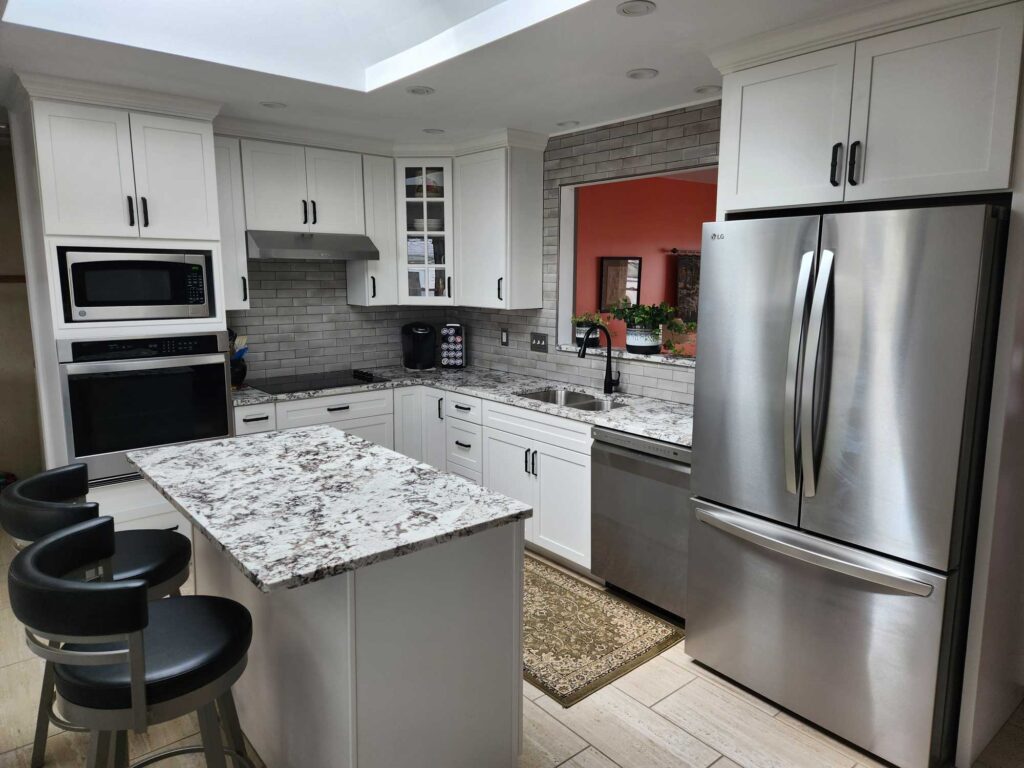
Cons of Granite Countertops
Granite isn’t a perfect countertop material choice. Like other options, granite has its drawbacks. They include:
Cost
While granite countertops offer many benefits, one potential drawback is their cost. Granite countertops can be expensive, especially if the homeowner wants a rare color or pattern. The cost of granite countertops is determined by several factors, including the quality, thickness, and size of the slab, as well as the complexity of the installation process. The rarity of a particular color or pattern can also affect the price. Homeowners who are on a tight budget may find that granite countertops are not a feasible option for their renovation project.
Porosity
While granite countertops are known for their durability and low maintenance, one potential drawback is that they are porous. This means that they can absorb liquids and stains if they are not properly sealed. However, sealing the surface regularly can help prevent this. Sealer is not resistant to heat, so you need to be careful not to scorch it. Our fabricators recommend using trivets underneath pots and pans that come directly from the oven or stovetop.
Heaviness
Another potential drawback of granite countertops is their weight. Granite is a heavy material, and as a result, it may require extra support from the cabinetry underneath. This can add to the overall cost of the installation, as additional support may need to be added to the cabinetry to ensure that the countertop is properly supported. However, the weight of granite can also be seen as a positive attribute, as it is an indication of its durability and quality.
Limited Availability
Another drawback of granite countertops is their limited availability. While granite comes in a wide range of colors and patterns, certain options may be difficult to find. This can be a concern for homeowners who have specific requirements for their countertop color and pattern. For example, if a homeowner wants a particular shade of blue or a unique veining pattern, it may be more difficult to find the perfect match with granite than with other countertop materials. This can result in longer lead times for installation or higher costs for special orders.
Installation
Installing granite countertops can be a complicated and time-consuming process that typically requires professional help. This can add to the overall cost of the countertop installation, as homeowners may need to hire a professional installer to ensure that the countertops are installed and fitted properly to the cabinetry.
The decision to install granite countertops will depend on several factors, including a budget, lifestyle, and personal preferences. While granite countertops offer many advantages such as durability, aesthetics, and low maintenance, they also have some drawbacks such as cost, a porous surface, and a complicated installation process. It’s important to weigh the pros and cons carefully before making a decision and to consult with a professional if needed. Overall, granite countertops can be a great investment for a home, adding both functionality and style for years to come.