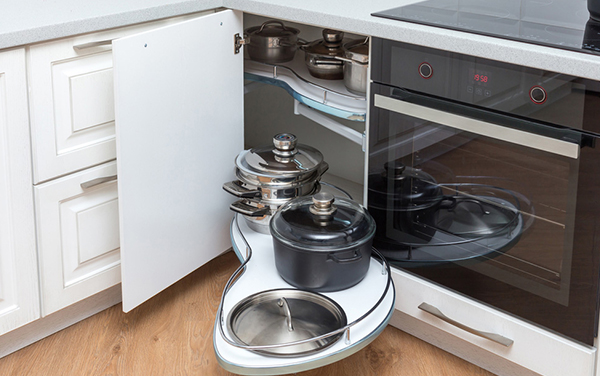
Are you tired of struggling with kitchen and bathroom cabinets cluttered with a mess of items? Organizing your cabinets can seem practically impossible, especially in a busy household. Yet it only takes a concentrated effort and some targeted ideas to get the clutter under control. Taming your cabinets can take only a weekend per room if you go in with a plan and your supplies on hand.
In this blog post, you’ll learn plenty of tips and tricks for purging, organizing, and maximizing the space in your cabinets. Apply these suggestions to all the cabinets in your home to get them under control once and for all.
Routinely Purge Items
At least once every three months, go through the cabinets in your kitchen and bathrooms and take out any empty, out-of-date, or unused items. If you don’t want to dispose of or recycle the items, you can always relocate them to a different storage area rather than an active cabinet space. For example, a hair dryer that you’ve replaced with a better model shouldn’t keep taking up space in a bathroom cabinet. This can help you collect items for a yard sale or thrift store donation while also reducing unnecessary clutter in the cabinets.
Group Items by Type
Keeping items where they’re easily found when needed only takes a little extra effort. Place items that are used regularly towards the front of the cabinet space, while backups and goods rarely used should go towards the back. Group items that are related or used together, such as baking goods all in one area so there’s no need to hunt for the brown sugar.
Use Dividers and Trays
Setting aside groups of similar items is easy with the right cabinet organizers. Cabinet trays, dividers, and other organizing devices are key to preventing clutter. No matter the cabinet’s size, depth, or height, there’s an organizer to match the space. Look for tall, narrow dividers for pantry staples like pasta and cereal boxes. For small rounder items like bottles of medication, try trays that keep everything in a single layer for easy viewing.
Maximize Vertical Space
Don’t settle for the shelving already installed in the cabinets. Shelf risers and stackable organizers create new layers for arranging short and small items. Consider storing items in a different orientation as well to make use of the vertical space inside a cabinet.
Create Clear Labels
Labeling is the key to finding the item you need in a large cabinet with limited lighting. Use a large font and a highly contrasting color combination like black or red on white. Use a single word or two to describe the item in the largest text, even if you want to include other information in smaller text.
Utilize the Back of Cabinet Doors
Cabinet doors provide all sorts of opportunities for hanging hooks and racks to expand storage opportunities. A well-placed wire rack can hold all sorts of small accessories that otherwise might get lost in the shuffle of larger appliances or tools. Hooks hold utensils, cords, and other long and skinny items so they don’t take up too much space on the shelves inside the cabinets. Consider dispensers as well, many of which fit inside cabinet doors.
Rotate the Items
For consumable and perishable items in the pantry and medicine cabinet, start a rotation plan. Store the oldest items in front and the newest in back, making sure to check expiration dates regularly and remove anything that has expired. You can tie this into your efforts to inventory the contents of your cabinets, or you can just follow a simple practice of manually rotating items every six months or so.
Choose Transparent Containers
Clear storage containers and organizers make it easy to see items inside them. Protect important equipment from dust and damage without forgetting it exists with see-through storage. Aim for a container big enough to only store one device or item at a time, plus its accessories, to avoid the need to look through various boxes to find something specific.
Assign Everything a Place
Speaking of not looking too long for something, try assigning everything a place in cabinets that only contain a limited stock of items. If you’re always returning your stand mixer or flour container to the same spot in a cabinet, you’ll know exactly where to go to find it. Even if other items may sometimes circulate in different spots in the cabinet, make larger items fixed in their placement for easier organizing.
Keep an Inventory
Ever end up with a dozen cans of the same beans for a recipe you only cook once? Overbuying can flood your cabinet, so stay on top of what’s in stock in the cabinets. Everything from cosmetics in the bathroom to pantry items in the kitchen is easily tracked by hand in a notebook or through various apps that simplify the process. Snapping photos of your cabinets can let you know at a glance what’s out when you’re at the store as well. Your cabinets can become organized and easy to use, even if it seems impossible to start. Just focus on getting the right tools and tackling one section of cabinetry at a time to see the clutter resolve into a well-organized system instead. Schedule reminders to revisit and reset the cabinets to your original organizing plan at least once a month so they don’t fall back into disarray.