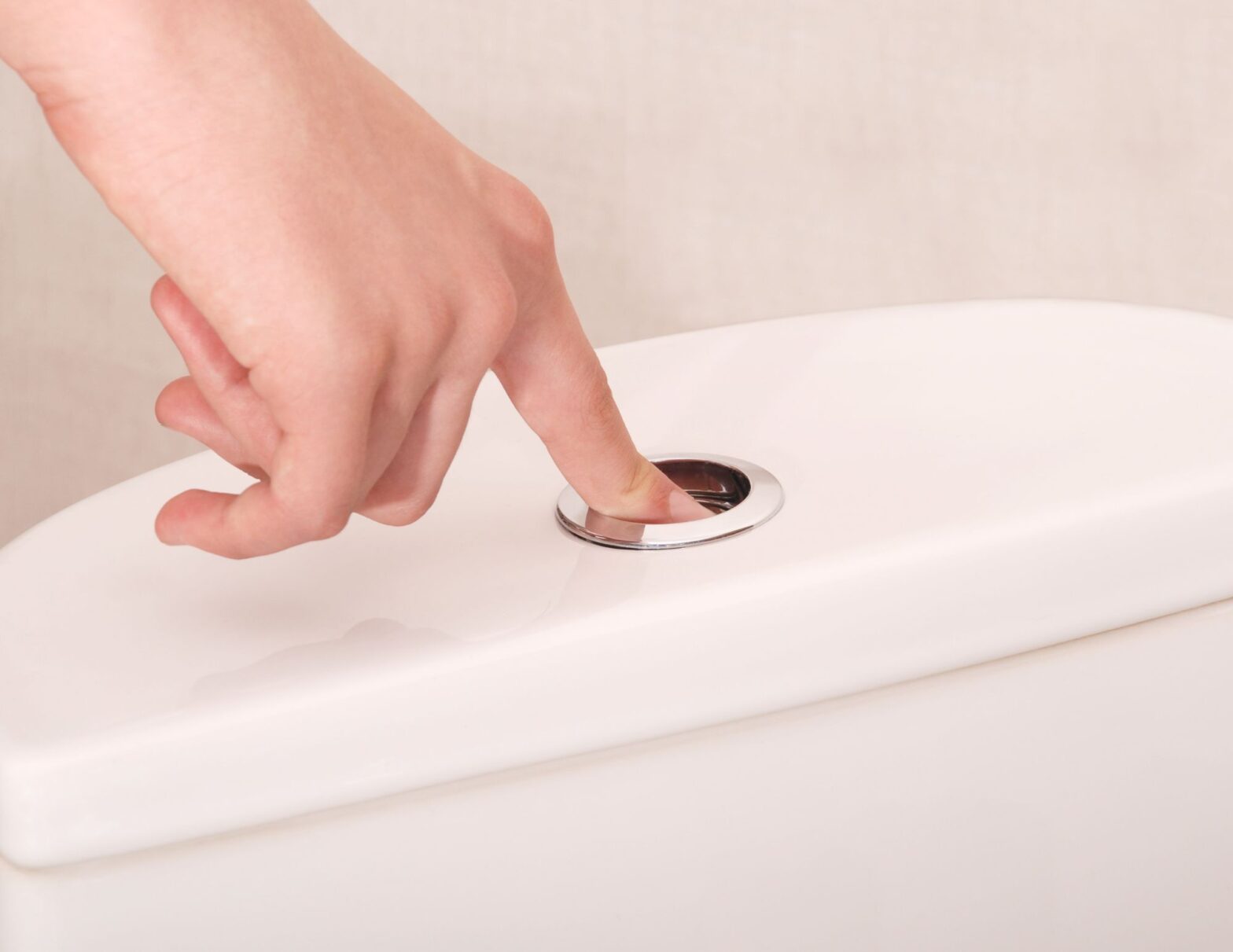
When selecting a toilet for your bathroom, it can feel like the options are endless. Should you choose a standard or comfort height toilet? One piece or two piece? What about an elongated or round seat? On the search for the perfect toilet you may have come across the term “Low-flow” or “Low-flush” toilet. Though it may sound like another piece of technical jargon to gloss over, this feature can be make or break for your water-spending and efficiency.
What Is a Low-Flow Toilet?
Low-flow, or low-flush, toilets are a type of toilet categorized by their ability to use significantly less water when flushing than traditional toilets. These toilets were created in response to concerns surrounding water usage and shortages.
Prior to the 1990s, standard flush toilets used at least 3.5 gallons of water per flush, making them inefficient and wasteful when compared to the developments in toilet and water conservation. To face rising concerns on water usage, some states began to develop water-efficiency standards, requiring toilets to use no more than 1.6 gallons per flush. The federal government soon followed suit and adopted this standard. As technology has advanced, some states have constricted that new toilets must use 1.28 gallons per flush or less.
Types of Low-Flow Toilets:
Gravity-Fed Toilets
Gravity-fed toilets are a common kind of toilet that utilizes gravity to flush waste. Gravity-fed toilets are simple by design, making them easier to maintain and repair than more complex toilets. A flapper at the base of the tank is lifted, allowing gravity to pull water from the tank downwards. This water pulls from the bowl, whisking away any waste and water with it.
Pressure-Assist Toilets
Pressure-assist, also called power-flush, systems are a form of flushing technology that utilizes compressed air to push water into the bowl. This complex system offers power to a low-flow toilet but is harder to maintain and repair due to additional technology.
Dual Flush Toilets
Dual-flush toilets offer two flush settings, allowing you to tailor your water usage to your needs. This includes both a full flush and low-flush option, though the exact specifications on GPF (gallons per flush) vary from toilet to toilet.
What Is a WaterSense Label?
Established in 1992, the Energy Policy and Conservation Act was established by the United States Congress in response to concerns addressing the conservation of water supply in the United States. This affected water-use standards for faucets, showerheads, and toilets, ensuring that every water source in the home was functioning with efficiency and water conservation in mind.
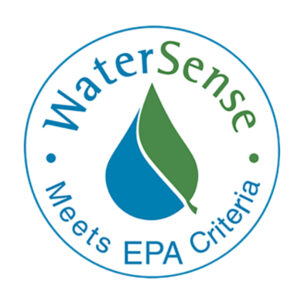
Launched in 2006, WaterSense is a voluntary program sponsored by the U.S. Environmental Protection Agency (EPA). The WaterSense label is earned by water fixtures that use at minimum 20% less water than the federally mandated standards. According to the original standards placed in 1992, toilets must use less than 1.28 gallons per flush to earn the WaterSense label.
Look for the WaterSense Label when selecting a toilet or other water fixture for your home
Why Choose a WaterSense Labeled Toilet?
To earn a WaterSense label, a toilet must use less than 1.28 GPF (gallons per flush), which is 20% less than the current federal standard. As technology has developed, advancements have been made in water conservation and GPF rates. Many new toilets have been designed to perform with less than a gallon of water used per flush, with some reaching as low as 0.8 GPF. There are many benefits to selecting a WaterSense labeled toilet for your home.
Cut Your Water Spending
By making the switch to a WaterSense labeled toilet, your household stands to reduce your toileting water consumption by 20 to 60 percent, measuring around 13,000 gallons of water saved a year! For the environmentally conscious, installing a WaterSense labeled toilet is a surefire way to lower your family’s environmental impact and cut down on your water spending.
Less Water = More Savings
While saving on water usage, WaterSense labeled toilets also help you save money in the long run. By using less water per flush, your WaterSense labeled toilet can save you $110 per year or more on your water bill. Over your toilet’s lifetime, this conservation of water can save you over $2,200.
No Compromise on Flushing Power
With advancements in toilet technology, low-flow toilets have come leaps and bounds in power and performance. WaterSense labeled toilets are designed to perform just as effectively as higher-flow toilets, all while using less water and energy.