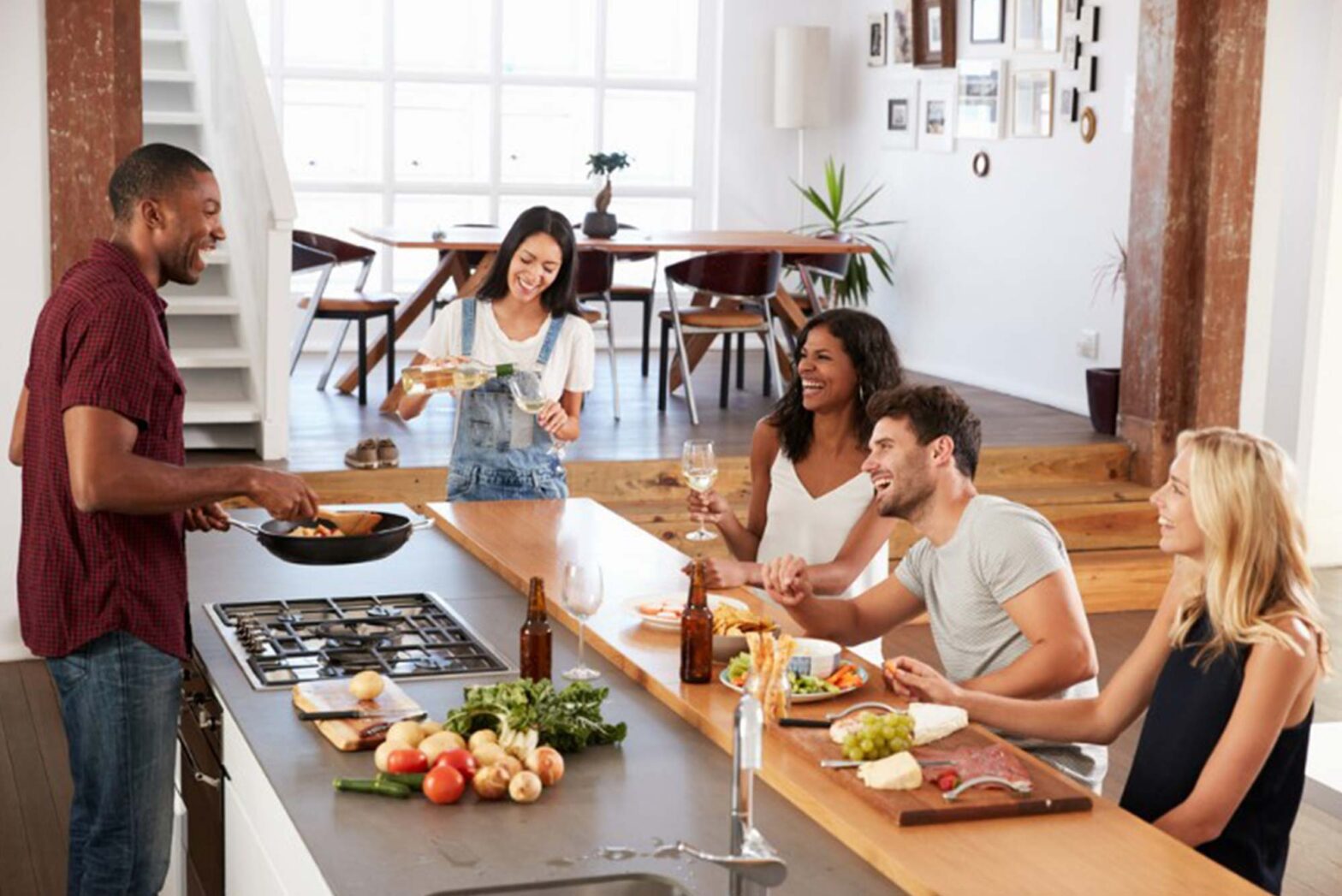
If you enjoy hosting social gatherings in your home, one of your key considerations should be the kitchen design. A well-designed kitchen makes meal preparation more efficient for you and socializing more inviting and comfortable for your guests. Here are some elements of kitchen design that deserve special attention when designing a kitchen for entertaining guests.

Layout and Flow
Consider the layout and flow when designing your kitchen. Think about things like how people will move about the room, as well as the workflow for meal preparation. You’ll want to have ample space for guests to freely move around without bumping into each other, the furnishings, or getting in the way of the host. Consider an open floor plan that connects the kitchen to the dining and living areas. This kind of layout will accommodate more guests as they mingle and interact. Consider incorporating an island or peninsula to provide additional workspace, and to act as a natural gathering spot for guests. Bear in mind that an island can be a barrier and disrupt the flow of traffic, whereas a peninsula can be more easily arranged so it supports traffic flow. Both can be used as a buffet counter as well as a meal prep area.
If you find that your kitchen exudes a traditional or classic style, you might want to go for cabinet hardware that has intricate designs or that looks antique. This kind of hardware will add to the timeless appeal of your kitchen space, and support the warm, inviting atmosphere.
If you feel that your kitchen is a more modern or minimalist design, consider sleek kitchen cabinet hardware with clean lines and few embellishments. These will fit in well with the clean lines of your overall kitchen.
Seating Arrangements
Well-orchestrated seating arrangements encourage conversation and socializing among your guests. Ideally, you’ll want a mix of seating options, including barstools at the kitchen island, a cozy breakfast nook, and a formal dining area. This ensures that guests have a comfortable place to sit, no matter the occasion. Additionally, make sure that your seating arrangements have enough space between them to allow for easy movement and conversation. Finally, include a mix of seating that includes soft textures and relaxed design, as well as sturdy chairs. For the barstools, choose ones that have back support.
Lighting
Lighting is a key element in setting the mood and atmosphere for any social gathering. The kitchen should have a combination of ambient, task, and accent lighting to create a warm and welcoming space. Ambient lighting, such as recessed ceiling lights or a chandelier, sets the overall tone of the space. Task lighting, such as under-cabinet or pendant lights, is important for illuminating specific work areas. Finally, accent lighting, like LED strip lights or wall sconces, can highlight architectural features or artwork. Dimmer switches are a great addition, as they allow you to easily adjust the lighting levels to suit the mood of the gathering.

Appliances
When designing a kitchen for entertaining guests, it’s important to have the right appliances to make food preparation and serving more efficient. A double oven, warming drawer, and a built-in microwave can all help streamline the cooking process, allowing you to prepare multiple dishes at once. A large refrigerator with ample storage space is essential for keeping ingredients and beverages chilled. Additionally, a wine fridge or built-in bar can make serving drinks easier and more organized. A dishwasher with a high capacity and quiet operation is also a must-have, making cleanup a breeze.
Storage
Having ample storage space is an indispensable aspect of a well-designed kitchen, particularly when you are entertaining guests. Efficient storage solutions will not only keep your kitchen organized but also help you avoid unnecessary stress while hosting. Cabinets and drawers ought to be thoughtfully placed and organized in a way that makes accessing cookware, dishes, utensils, and other kitchen essentials seamless. To maximize your storage space, consider installing pull-out shelves, custom organizers, or even lazy Susan’s, which can transform hard-to-reach corners into functional areas.
A well-organized pantry or additional cabinetry can serve as a dedicated space to store extra tableware, linens, serving pieces, and non-perishable food items, ensuring that everything you need is readily available and easy to locate. Incorporating open shelving or glass-front cabinets can be an aesthetically pleasing way to display your frequently-used items or showcase your beautiful dishware collection, all while keeping them within reach.
Finishing Touches
Adding personal touches to the kitchen can help create a warm and inviting atmosphere for guests. A statement backsplash, unique hardware, and artwork can all add character to the space. Bold colors or patterns can inject personality into the room, while natural materials, like wood and stone, bring warmth and texture. Fresh flowers, scented candles, or an herb garden can also add a pleasant aroma and visual appeal to the kitchen. Don’t forget to include some comfortable and stylish textiles, such as area rugs, curtains, or seat cushions, to make the space feel cozy and inviting.
Designing a kitchen for entertaining guests involves many practical and aesthetic considerations. The ultimate goal is to design a space that is not only functional and efficient but also warm, inviting, and conducive to socializing. Incorporate all of these elements into your new kitchen design for a space that’s ideal for entertaining guests in your home.